Beyond the Last Exit: How Geographic Isolation Undermines Secure Delivery for Rural US Customers
Carrier service maps look reassuring. The color fills in across the continental United States, the coverage appears comprehensive, and the service commitment language reads the same for a customer in suburban Chicago as for one in rural eastern Montana. The map, however, is not the territory. For the approximately 46 million Americans living in rural communities, the delivery experience that carriers advertise and the delivery experience that actually occurs can differ in ways that carry real financial and operational consequences for the businesses shipping to them.
This is not a fringe problem. The US Census Bureau estimates that rural populations are spread across roughly 97 percent of the nation's land area. E-commerce businesses with national customer bases are, by definition, serving rural markets—and the logistics infrastructure those markets receive is materially different from what urban and suburban customers experience.
The Coverage Illusion
Most national carriers claim coverage across all US ZIP codes, and technically, that claim is accurate. What the coverage designation does not specify is the service tier, delivery frequency, handling chain, or security posture that applies to rural addresses within that coverage area.
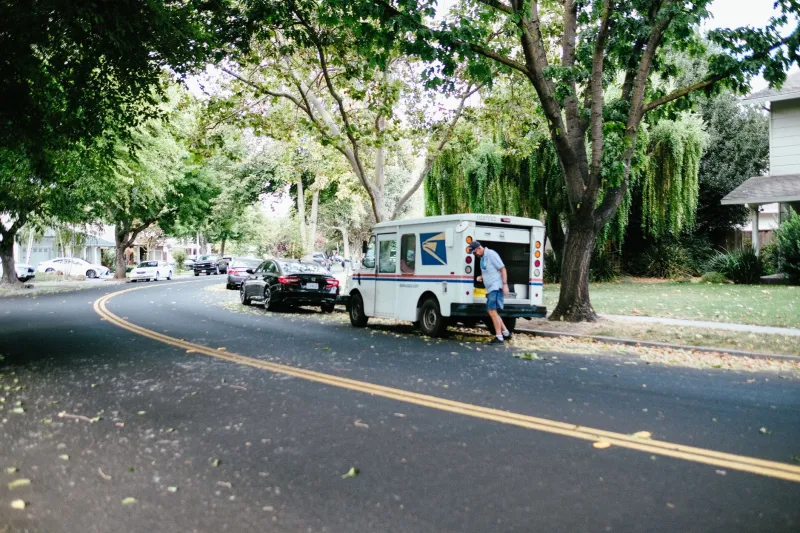
In practice, rural delivery in the US is frequently handled through a combination of USPS last-mile partnerships, regional subcontractors, and independent drivers whose operational standards may differ significantly from the primary carrier's published protocols. A package tendered to a major national carrier in Atlanta may transfer hands multiple times before reaching a customer in a small Wyoming town—each transfer representing a point where chain-of-custody documentation becomes less rigorous and carrier accountability becomes more contested.
Delivery frequency is another underpublicized variable. While urban routes may receive daily service, many rural routes are serviced two to three times per week at best. This means that a package arriving at a regional hub on a Wednesday may not reach its rural destination until Friday or Monday—and during that interval, it may sit in a facility not equipped or staffed for secure long-term package holding.
Where Packages Become Vulnerable
The security vulnerabilities specific to rural delivery are distinct from those in urban environments, and they tend to compound one another.
Extended unattended delivery windows. Rural properties are often not staffed or occupied during delivery hours, and unlike urban apartment buildings or suburban neighborhoods with regular foot traffic, there may be no practical alternative to leaving a package unattended. Carrier policies that permit leave-at-door delivery without signature—standard practice across most national carriers for residential addresses—mean that packages can sit exposed for hours or, in some documented cases, days before the recipient retrieves them.
Limited alternative delivery infrastructure. Urban and suburban customers have access to package lockers, carrier pickup locations, and hold-for-pickup options at nearby retail partners. Rural customers frequently do not. The nearest carrier access point may be thirty or more miles away, making redirect-to-pickup an impractical solution for most recipients.
Reduced driver familiarity and routing errors. Rural delivery routes are longer, less standardized, and more dependent on individual driver judgment than urban routes. Misdelivery rates—packages left at incorrect addresses—are higher in areas where address numbering is inconsistent, road signage is limited, or GPS mapping has not been updated to reflect recent infrastructure changes. A misdelivered package in a rural area may not be discovered or returned for days.
Insurance claim skepticism in low-density markets. When rural customers file claims for undelivered or damaged packages, they face a structural disadvantage in the claims process. Without doorbell cameras, dense neighbor networks, or readily available witnesses, the evidentiary record supporting a claim is often thinner than what urban claimants can produce. Some carriers' claims teams have acknowledged—informally, if not in policy—that rural claims face higher scrutiny because the delivery environment is harder to verify.
The E-Commerce Business Calculus
For online retailers, the rural delivery problem is both a customer experience issue and a direct financial exposure. When a package fails to arrive, or arrives damaged, or sits unattended long enough to be stolen, the business absorbs the consequences: replacement costs, customer service overhead, reputational damage, and the potential loss of a customer who may not give a second chance.
The problem is amplified by customer expectations shaped by urban delivery norms. A customer in rural North Carolina who expects two-day delivery based on a carrier's advertised service commitment and receives their order five days later—or not at all—does not distinguish between the carrier's failure and the retailer's. The retailer owns that experience in the customer's perception.
Businesses that have not audited their carrier's actual rural performance—not the service commitment, but the measured delivery time and exception rate for rural ZIP codes—are operating with an incomplete picture of their customer experience and their financial exposure.
Strategies for Serving Rural Markets Without Accepting Unacceptable Risk
The rural delivery challenge does not have a single solution, but a combination of deliberate practices can substantially reduce exposure for businesses committed to serving customers across geographic boundaries.
Segment your carrier strategy by geography. A carrier that performs exceptionally well in urban markets may not be the right choice for rural shipments. Regional carriers and specialty logistics providers with deep rural route experience often deliver better outcomes in specific geographies than national carriers whose rural operations depend on subcontracted last-mile networks. Analyzing delivery performance data by ZIP code—rather than aggregate averages—reveals these disparities.
Set accurate delivery expectations at checkout. Displaying estimated delivery dates based on real carrier performance data for the customer's specific location, rather than carrier-advertised maximums, reduces the expectation gap that generates customer dissatisfaction. Some e-commerce platforms now support ZIP-code-level delivery estimate customization; using this capability for rural ZIP codes is a straightforward way to manage expectations honestly.
Default to signature-required delivery for high-value rural shipments. While signature requirements add friction, they provide meaningful protection against the unattended-delivery vulnerability that rural addresses present. For orders above a defined value threshold, requiring signature confirmation reduces the window during which a package sits exposed and creates a documentary record that supports insurance claims if needed.
Build rural claims documentation into your process. When shipping to rural addresses, retain detailed records of the shipment's condition at tender, the declared value, and the carrier's specific delivery commitment for that ZIP code. This documentation baseline strengthens any subsequent claim and reduces the evidentiary disadvantage rural claimants otherwise face.
Consider direct communication with rural recipients. Proactive delivery notifications—sent when a package enters the final leg of its journey—give rural recipients the opportunity to arrange to be present, redirect to a pickup location, or make other arrangements. This simple practice can meaningfully reduce the frequency of unattended delivery situations.
Serving Every Customer, Not Just the Convenient Ones
The geographic distribution of the US population means that any e-commerce business with national ambitions will serve customers whose delivery experience is structurally more complicated than the carrier's marketing suggests. Acknowledging that reality—and building logistics strategies that account for it—is not merely a customer service consideration. It is a fundamental component of operating a responsible, sustainable business.
At Safe Courier, we believe that secure delivery is not a privilege of geography. It is a standard that every customer, regardless of their ZIP code, deserves to receive. Achieving that standard in rural markets requires more deliberate planning than the national carrier's default service can provide—but for businesses that invest in that planning, it represents a meaningful competitive advantage in markets that less careful competitors routinely underserve.