Marked Delivered, Never Received: The Legal and Operational Gaps Behind Carrier Confirmation Systems
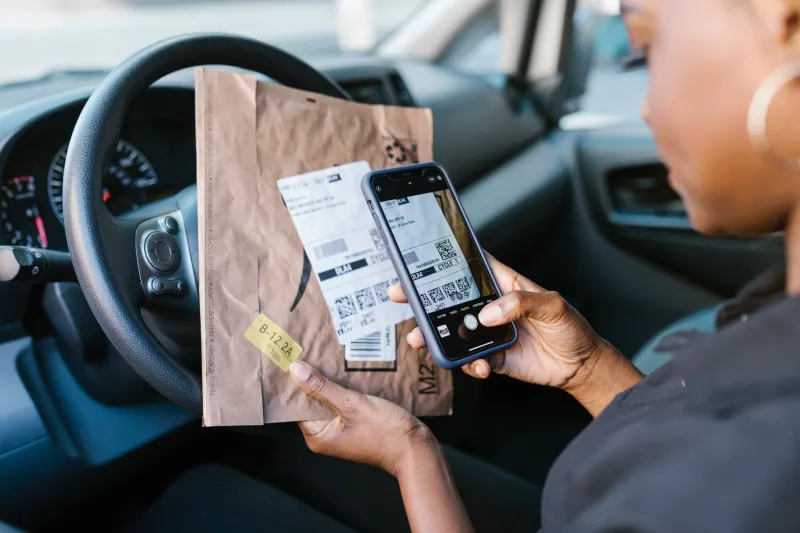
Every day, millions of Americans receive a notification informing them that a package has been delivered. For most, this triggers a trip to the front door or mailroom. But for a growing number of businesses and individuals, that notification is where the story ends—and the frustration begins. The package is not there. The carrier says it was delivered. And the question of who is responsible quickly becomes a legal and logistical maze.
The gap between a carrier's delivery status update and verifiable, documented receipt is not a minor technical inconvenience. It is a structural vulnerability embedded in how most courier systems operate—one that costs businesses thousands of dollars annually and leaves individuals without legal recourse.
What 'Delivered' Actually Means in Carrier Language
When a carrier marks a shipment as delivered, that status typically reflects one of several data points: a driver's manual scan at an approximate location, a GPS coordinate logged at the time of drop-off, or a photograph taken somewhere in the vicinity of the address. None of these, on their own, constitute verified receipt by an authorized individual.
In legal terms, delivery confirmation is a record of an action taken by the courier—not confirmation that the intended recipient received the package. Courts in multiple US jurisdictions have drawn this distinction clearly. In commercial disputes, a timestamped scan or delivery photograph has been found insufficient to demonstrate that goods actually changed hands, particularly when the recipient denies receiving them.
Carriers often use language like 'left at front door' or 'delivered to mailroom' in their tracking systems. These notations shift the implied burden of responsibility to the recipient without establishing a verifiable chain of custody. For high-value or time-sensitive shipments, this ambiguity is not acceptable.
The Signature That Wasn't: How Electronic Confirmation Falls Short
Electronic signature capture—the small stylus pad or touchscreen that delivery drivers carry—was once considered a meaningful step toward accountability. In practice, its reliability has eroded significantly. Drivers under time pressure have been documented signing packages themselves, collecting illegible scrawls that bear no resemblance to any authorized recipient, or obtaining signatures from individuals who have no authority to accept delivery on behalf of a business.
More recently, contactless delivery protocols introduced during and after the COVID-19 pandemic have further weakened the evidentiary value of signature confirmation. Many carriers adopted 'no-contact' delivery as a permanent option, meaning that even signature-required shipments may be left without any human handoff at all.
For businesses that ship regulated goods, pharmaceuticals, legal documents, or high-value merchandise, this erosion of signature integrity is not a minor inconvenience—it is a compliance risk. Certain industries are required by law to confirm receipt by authorized personnel. A phantom signature does not satisfy that requirement.
The Accountability Vacuum Between Systems
Modern shipping ecosystems are rarely simple two-party transactions. A shipment may originate with one carrier, transfer through a regional hub operated by a third-party logistics provider, and complete its final mile with a local delivery contractor. Each handoff represents a potential gap in documentation—and a potential gap in accountability.
When a package is marked delivered but cannot be located, the investigation often stalls at these interstitial points. The original carrier points to the handoff record. The regional hub points to the final-mile contractor. The contractor points to the GPS log. Meanwhile, the recipient is left without their package and without a clear path to resolution.
This fragmentation is not accidental. Carrier contracts are carefully structured to limit liability at each stage of the delivery chain. Understanding these contractual boundaries before a shipment goes missing—not after—is essential for any business that relies on courier services.
What Documentation Actually Protects You
Legal and logistics professionals consistently identify several documentation practices that provide meaningful protection in delivery disputes:
Require named-recipient signature confirmation. Rather than accepting a generic signature requirement, specify in writing that only named individuals or designated alternates are authorized to sign for a shipment. This creates a traceable chain of custody.
Request timestamped photographic proof of placement. Many carriers offer this as a standard or optional service. Ensure the photograph captures the specific address marker, not merely a doorstep that could belong to any property.
Establish internal receiving protocols. For businesses, a logged receiving process—where incoming packages are recorded by a staff member at the point of acceptance—creates an independent record that supplements carrier documentation.
Retain all tracking records immediately. Carrier systems sometimes update or overwrite delivery records. Screenshot and preserve tracking history as soon as a delivery is expected.
Include delivery verification clauses in vendor and courier contracts. These clauses should define what constitutes acceptable proof of delivery and assign liability clearly when that standard is not met.
Demanding Better Standards from Courier Partners
Businesses have more leverage over courier accountability than many realize. Service agreements are negotiable. A reputable courier partner should be willing to discuss enhanced verification protocols, defined escalation procedures for disputed deliveries, and clear liability language that reflects the actual value of what is being shipped.
At Safe Courier, our position is straightforward: a delivery is not complete until the recipient confirms it. That standard requires investment in personnel, technology, and process—but it is the only standard that holds up when disputes arise. Businesses that accept vague confirmation systems as the default are, in effect, accepting the financial risk that comes with them.
The phrase 'secure delivery' is not fulfilled by a scan or a photograph. It is fulfilled when a package reaches the right hands, at the right time, with documentation that can withstand scrutiny. Anything less is a liability waiting to be realized.