Tracking Tells You Where Your Package Was—Not Whether It Is Safe
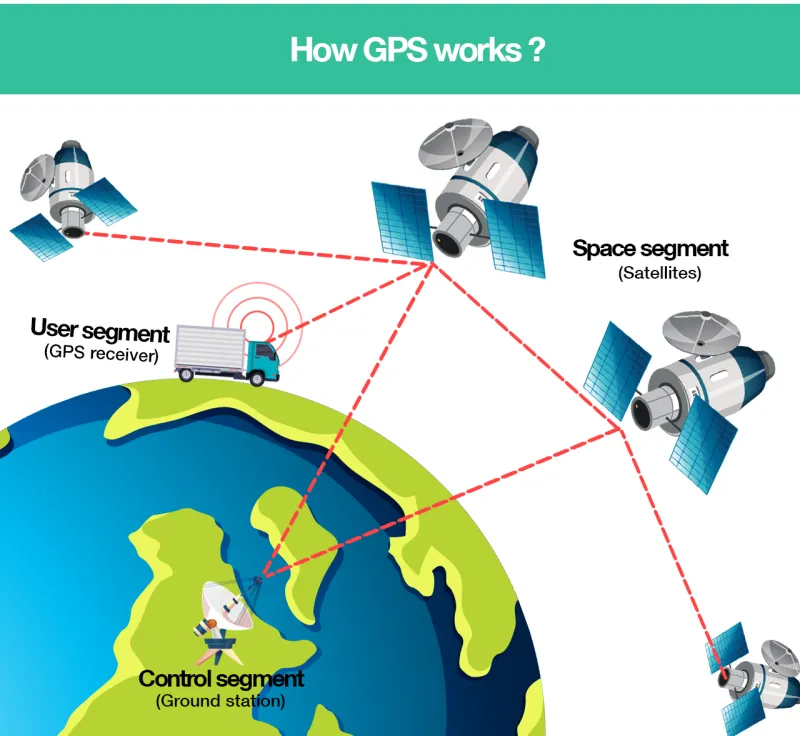
Photo: GPS package tracking logistics security theft prevention, via www.onelap.in
The blue dot moves across the map. The notification arrives: your package is twelve stops away. Then eight. Then two. Then it disappears.
For millions of American consumers and business shippers, this sequence—familiar, reassuring, and occasionally devastating—captures the fundamental limitation of GPS-based package tracking. The technology is genuinely useful. It is also widely misunderstood in ways that expose shippers to risks they believe they have already managed.
Real-time location tracking creates a compelling illusion of control. When you can see where a package is at any given moment, it is natural to assume that someone, somewhere, is watching over it. In most cases, no one is. The dot on the map is a data point, not a security measure. And the distinction between those two things carries significant financial and operational consequences for businesses that ship valuable goods.
What GPS Tracking Actually Measures
To understand the limits of tracking, it helps to understand what it actually does. GPS and cellular-based tracking systems record the location of a device—typically embedded in a vehicle or attached to a shipment—at regular intervals. That data is transmitted to a server and displayed through an interface accessible to the shipper and, increasingly, the recipient.
What tracking does not do is monitor the physical status of the package. It does not detect whether a box has been opened. It does not alert anyone when a package is transferred from a secured vehicle to an unsecured staging area. It does not prevent a driver from making an unauthorized stop. And it does not stop a package from being removed from a porch, a lobby, or a loading dock once it has been delivered—or placed there in error.
The technology is a record-keeping tool. It produces an excellent account of where a package traveled and when. In the event of a loss, that record can be valuable for establishing where in the chain a failure occurred. But establishing where a failure occurred is not the same as preventing it.
The Vulnerable Points That Tracking Cannot Protect
Package theft and loss do not occur randomly across the delivery journey. They concentrate at specific, predictable points where physical security is weakest and oversight is lowest.
Transfer hubs represent one of the highest-risk environments in the logistics chain. When packages move between carriers, between shifts, or between vehicles at a sorting facility, they pass through periods of reduced accountability. They are handled by multiple individuals, staged in open areas, and processed at volumes that make close monitoring impractical. Tracking data during these intervals is often coarse—a package may show a single location scan for a multi-hour window—providing little visibility into what is actually happening on the floor.
Residential final-mile delivery is the vulnerability that has received the most public attention, largely due to the porch piracy epidemic. The FBI has estimated that package theft costs American consumers and businesses billions of dollars annually. In this context, GPS tracking is essentially irrelevant. The package arrived exactly where the tracking system said it would. The problem is that it was left unattended, in plain view, at an address that may or may not have been the correct one.
Multi-carrier handoffs introduce accountability gaps that tracking cannot bridge. When a package moves from a regional carrier to a local last-mile provider—a practice increasingly common as national carriers subcontract final delivery—the tracking record may not transfer cleanly. The shipper sees a gap. The package may have been properly transferred, or it may have been staged, mishandled, or diverted. The dot on the map does not know the difference.
When Tracking Actually Prevents Loss
This is not an argument that tracking is without value. In specific circumstances, it meaningfully reduces risk.
For high-value shipments traveling in dedicated vehicles—where a single driver is responsible for a single load and the tracking system is monitored in real time by a dispatch team—GPS data can enable rapid response to route deviations, unauthorized stops, or extended idle periods. This is active monitoring, not passive data collection, and it requires human engagement to function as a security measure.
Tracking also creates deterrent effects when drivers and handlers know their movements are being logged. The knowledge that a route deviation will generate an alert changes behavior at the margins. It is not a guarantee, but it is a meaningful disincentive for opportunistic misconduct.
For insurance and liability purposes, tracking data is often essential. When a high-value shipment is lost or damaged, the ability to reconstruct the chain of custody with timestamped location data can determine which party bears responsibility and whether a claim will be honored. In this sense, tracking is a critical component of a complete security strategy—but it is one component, not the whole.
The Physical Measures That Actually Stop Theft
The couriers that achieve the lowest loss rates do not rely on tracking as their primary security tool. They invest in physical and procedural measures that address vulnerability at its source.
Tamper-evident packaging and sealing protocols ensure that any unauthorized access to a shipment is immediately detectable upon delivery. When a recipient can confirm that a package arrived with its security seals intact, the verification process is meaningful rather than ceremonial.
Controlled access vehicles limit who can interact with a shipment during transit. Cargo compartments that require key access or authorization codes reduce the risk of opportunistic theft during stops or at staging areas.
Signature-required delivery with identity verification addresses the porch piracy problem directly. A package that is not left unattended cannot be stolen from a doorstep. While this introduces friction into the delivery process, for shipments of meaningful value, that friction is a security feature.
Vetted, employed driver networks—as opposed to contractor-based last-mile models—create accountability relationships that pure tracking cannot replicate. A driver who is a direct employee of the courier, with background screening, performance monitoring, and professional accountability, represents a fundamentally different risk profile than an independent contractor processed through a gig-economy platform.
Reframing the Security Conversation
Businesses that ship valuable goods deserve an honest conversation about what their tracking subscription does and does not provide. Visibility is not security. Knowing where a package was at its last scan does not protect it from the vulnerabilities that exist between scans, at transfer points, and in the critical final moments before delivery.
A genuinely secure shipping operation combines tracking data with physical safeguards, procedural accountability, and courier partners who treat loss prevention as an operational priority rather than a marketing claim. The blue dot is a useful tool. It is not, on its own, a reason to feel secure.