When the Cold Chain Breaks: The True Cost of Inadequate Temperature-Controlled Shipping
Every year, billions of dollars in temperature-sensitive goods are compromised during transit across the United States. Insulin vials arrive thawed. Artisan cheeses reach their destination spoiled. Biotech samples rendered unusable before they ever reach the lab. In each of these scenarios, the common thread is not the product itself—it is the failure of the logistics solution responsible for protecting it.
For businesses that ship temperature-controlled goods, the stakes extend well beyond a single lost shipment. Regulatory exposure, liability claims, and eroded customer confidence can compound into consequences that outlast any single delivery failure. Yet many organizations continue to entrust these shipments to standard couriers that are simply not equipped for the task.
What "Temperature-Sensitive" Actually Means in Practice
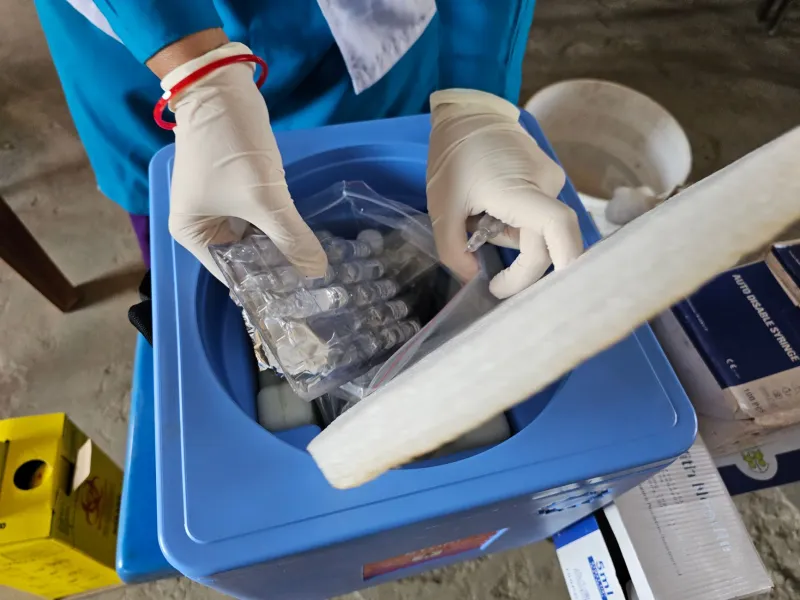
The term "temperature-sensitive" encompasses a remarkably broad range of products. Pharmaceutical drugs—including vaccines, biologics, and certain over-the-counter medications—frequently require storage and transit between 2°C and 8°C (36°F to 46°F). Specialty foods such as raw seafood, dairy, and premium charcuterie demand consistent refrigeration to remain both safe and marketable. Floral arrangements, certain cosmetics, and laboratory specimens each carry their own specific environmental requirements.
What unites these products is their vulnerability. A deviation of even a few degrees—sustained for only a matter of hours—can render a shipment unsalvageable. Standard courier services, which prioritize speed and volume over environmental control, are not designed to manage these narrow tolerances. Refrigerated compartments may not be calibrated. Temperature logs may be absent or incomplete. And when something goes wrong, the documentation needed to file a claim or satisfy a regulatory inquiry often does not exist.
The Regulatory Landscape US Businesses Cannot Afford to Ignore
In the United States, temperature-controlled shipping is not merely a best practice—it is, in many cases, a legal obligation. The Food and Drug Administration's Food Safety Modernization Act (FSMA) imposes strict requirements on the transportation of human and animal food, including mandates around temperature controls, sanitary conditions, and written procedures. The FDA's Sanitary Transportation of Human and Animal Food rule, which became fully enforceable for smaller carriers in 2018, places direct responsibility on shippers and carriers alike.
For pharmaceutical shipments, the regulatory bar is higher still. The Drug Supply Chain Security Act (DSCSA) and Good Distribution Practice (GDP) guidelines require documented evidence that products have remained within specified temperature ranges throughout the supply chain. Failure to provide this documentation—even when the product itself appears intact—can result in shipment rejection, product destruction orders, and, in serious cases, federal penalties.
State-level regulations add another layer of complexity. California, for instance, maintains some of the most stringent food safety transport requirements in the country, while several northeastern states have enacted their own pharmaceutical distribution standards that operate alongside federal law. Businesses shipping across state lines must navigate this patchwork of requirements with precision.
How Standard Couriers Fall Short
The shortcomings of conventional courier services in cold chain scenarios are both structural and operational. Most standard delivery vehicles are not equipped with validated refrigeration units—meaning the temperature inside the cargo area cannot be reliably confirmed or recorded. Even services that advertise "refrigerated" options may lack the continuous monitoring technology required to produce the unbroken temperature logs that regulators and quality assurance teams demand.
Beyond equipment limitations, standard couriers rarely employ staff trained in cold chain protocols. Proper handling procedures—such as pre-cooling packaging before loading, avoiding prolonged door-open times, and recognizing when a shipment has been compromised—require specialized knowledge that is simply not part of standard courier training curricula.
The consequences of these gaps have been well-documented. A 2021 study published in the Journal of Pharmaceutical Sciences found that a significant percentage of pharmaceutical shipments experienced at least one temperature excursion during transit, the majority of which occurred at transfer points—precisely where standard couriers are most likely to be involved. In the food industry, the CDC estimates that contaminated food causes approximately 48 million illnesses annually in the US, with improper transportation identified as a contributing factor in a meaningful share of cases.
Real-World Failures and What They Cost
Consider the operational reality facing a mid-sized US nutraceutical company that relied on a national parcel carrier to distribute refrigerated probiotic supplements to retail partners. During a summer heat wave, multiple shipments experienced temperature excursions during last-mile delivery. The result: approximately $180,000 in destroyed inventory, two retail partners placing the brand on probationary status, and an FDA inquiry triggered by a consumer complaint. The company ultimately invested in a certified cold chain courier—an expense that, in retrospect, represented a fraction of the losses sustained.
A similar pattern plays out in the specialty food sector. A Pacific Northwest salmon producer shipping direct-to-consumer during the holiday season entrusted a regional parcel service with overnight delivery. A sorting facility delay extended transit time beyond 24 hours without adequate temperature maintenance. Product arrived spoiled, refund requests flooded customer service, and social media amplified the complaints. The reputational damage persisted well into the following quarter.
These are not anomalies. They are predictable outcomes when the wrong logistics solution is applied to a specialized problem.
What Qualified Cold Chain Logistics Actually Looks Like
Businesses serious about protecting temperature-sensitive shipments should evaluate logistics partners against a specific set of criteria. First, look for validated equipment: refrigeration units that have been independently tested and certified to maintain specified temperature ranges under real-world conditions. Second, require continuous temperature monitoring with data loggers that produce retrievable, tamper-evident records for every shipment.
Third, assess the carrier's training standards. Certified cold chain handlers should be familiar with FSMA requirements, pharmaceutical GDP guidelines, and proper packaging protocols for various product categories. Fourth, evaluate the carrier's contingency planning—what happens when a vehicle breaks down, a flight is delayed, or a facility loses power? A qualified provider will have documented protocols for each scenario.
Finally, consider the documentation infrastructure. In the event of a regulatory inquiry or insurance claim, the ability to produce a complete, unbroken record of a shipment's environmental history is not a convenience—it is a necessity.
The Business Case for Specialized Courier Partnerships
For companies that ship temperature-sensitive goods with any regularity, the economics of specialized cold chain logistics are straightforward. The cost premium associated with a qualified courier is, in virtually every scenario, lower than the combined cost of a single significant failure—accounting for destroyed product, regulatory penalties, customer compensation, and reputational repair.
More broadly, reliable cold chain logistics is a competitive differentiator. In industries where product integrity is a baseline customer expectation, the ability to deliver that assurance consistently—and to document it—builds the kind of trust that sustains long-term business relationships.
At Safe Courier, we recognize that secure delivery means different things for different shipments. For temperature-sensitive goods, security is not just about physical protection—it is about environmental integrity from the moment a package is picked up to the moment it arrives. That standard does not leave room for approximation.