When the Grid Goes Dark: How Specialized Courier Networks Sustain Critical Supply Chains Under Extreme Pressure
Most businesses only think about emergency logistics after something has already gone wrong. A hospital runs short of blood products during a regional power failure. A manufacturer loses a critical component shipment when a hurricane reshapes the Gulf Coast's road network overnight. A pharmacy chain scrambles to redistribute insulin across three states after a warehouse fire. In each of these scenarios, the question is never whether a courier can deliver under normal conditions — it is whether they can deliver when normal conditions no longer exist.
This distinction defines the operational gap between standard shipping providers and the specialized courier networks that keep America's emergency supply chains moving when everything else stops.
The Architecture of Resilience
Reliable emergency logistics is not improvised. It is designed, tested, and maintained long before any crisis materializes. The courier operations that consistently perform under extreme pressure share a common structural philosophy: redundancy at every layer.
This means maintaining multiple routing options across road, rail, and air. It means pre-positioning vehicles and drivers in regions prone to weather events before storm season begins. It means establishing fuel reserves and maintenance protocols that function independently of commercial infrastructure. And it means investing in communication systems — satellite-based, where necessary — that remain operational when terrestrial networks fail.
During Hurricane Ida in 2021, portions of Louisiana's highway system became impassable within hours of landfall. Courier operations that had pre-staged assets in Baton Rouge and Shreveport were able to reroute critical medical supply deliveries through alternative corridors while competitors waited for roads to reopen. The difference in outcome was not luck. It was advance planning translated into physical positioning.
Medical Emergencies and the Zero-Tolerance Standard
Few sectors expose the stakes of emergency logistics more acutely than healthcare. Hospitals, dialysis centers, blood banks, and specialty pharmacies operate on supply timelines measured in hours, not days. When those timelines are disrupted — by weather, infrastructure failure, or sudden demand spikes — the consequences extend well beyond a delayed package.
During the early months of the COVID-19 pandemic, conventional freight networks buckled under simultaneous demand surges and workforce shortages. Specialized medical couriers that had invested in dedicated driver pools, temperature-controlled transport, and real-time chain-of-custody documentation were able to maintain service continuity for healthcare clients even as general parcel carriers announced significant delays.
What distinguished these operations was not simply their equipment. It was their decision-making framework. Medical courier networks typically operate under strict escalation protocols: if a primary route is compromised, a secondary route activates automatically. If a vehicle becomes unavailable, a backup driver is dispatched within a defined window. Every contingency has a documented response, and every team member knows their role within it.
This level of procedural discipline is precisely what healthcare procurement officers are evaluating when they select a logistics partner — not price, not speed under ideal conditions, but demonstrated performance when conditions are anything but ideal.
Infrastructure Failures and the Urban Logistics Challenge
Natural disasters receive the most attention, but infrastructure failures in dense urban environments present their own category of emergency logistics challenge. A major water main break can close multiple city blocks for days. A subway system outage can paralyze last-mile delivery in ways that no amount of additional vehicles can fully resolve. A data center failure can knock out the digital systems that coordinate modern courier operations entirely.
In February 2021, the Texas power crisis demonstrated how quickly cascading infrastructure failures can sever supply chains across an enormous geographic area. Warehouses lost temperature control. Fuel pumps stopped working. Road surfaces became hazardous. For courier networks operating in the region, the crisis was a live test of every redundancy protocol they had — or had not — put in place.
The operations that continued functioning shared one trait in particular: they had invested in analog fallback systems. Paper-based manifests, CB radio communication, and pre-assigned driver territories meant that even when digital infrastructure failed, human coordination could continue. This is an uncomfortable truth for an industry that has largely moved toward technology-first operations — but it is a truth that emergency logistics validates repeatedly.
The Role of Pre-Negotiated Emergency Agreements
For businesses that depend on uninterrupted supply chains, one of the most consequential decisions made during normal times is the negotiation of emergency service agreements with courier partners. These agreements — sometimes called priority service contracts or contingency logistics arrangements — establish in advance the terms under which a courier will prioritize a client's shipments during declared emergencies or supply disruptions.
Without such agreements in place, businesses compete for scarce courier capacity at exactly the moment when that capacity is most constrained and most expensive. With them, they have a defined place in the dispatch queue, a guaranteed response time, and a clear point of contact who already understands their operational requirements.
Hospitals, utility companies, and government agencies have long recognized the value of pre-negotiated emergency logistics arrangements. Private businesses in sectors ranging from manufacturing to retail are increasingly adopting the same approach — particularly those that experienced supply chain failures during the pandemic and have since undertaken serious continuity planning reviews.
What "Delivering Under Pressure" Actually Requires
The phrase is used loosely across the logistics industry, but genuine emergency delivery capability requires specific, verifiable operational investments. These include:
- Diversified carrier relationships that allow rapid modal shifts when a primary transport mode becomes unavailable
- Driver training programs that include emergency routing, hazardous condition protocols, and chain-of-custody procedures for sensitive cargo
- Real-time visibility platforms with offline capability, ensuring that shipment status can be tracked and communicated even during network outages
- Dedicated emergency response teams available outside standard business hours — because crises rarely observe a nine-to-five schedule
- Post-event review processes that systematically capture lessons learned and translate them into operational improvements before the next event
Courier providers that can document these investments — not merely claim them in marketing materials — represent a fundamentally different category of partner than those offering standard commercial shipping services.
Choosing a Partner for the Moments That Matter Most
For procurement officers, operations managers, and business owners evaluating courier relationships, the emergency logistics question deserves explicit attention during the vendor selection process. Asking a prospective courier partner how they performed during a specific recent disruption — and requesting verifiable data to support their answer — is one of the most effective ways to assess genuine capability.
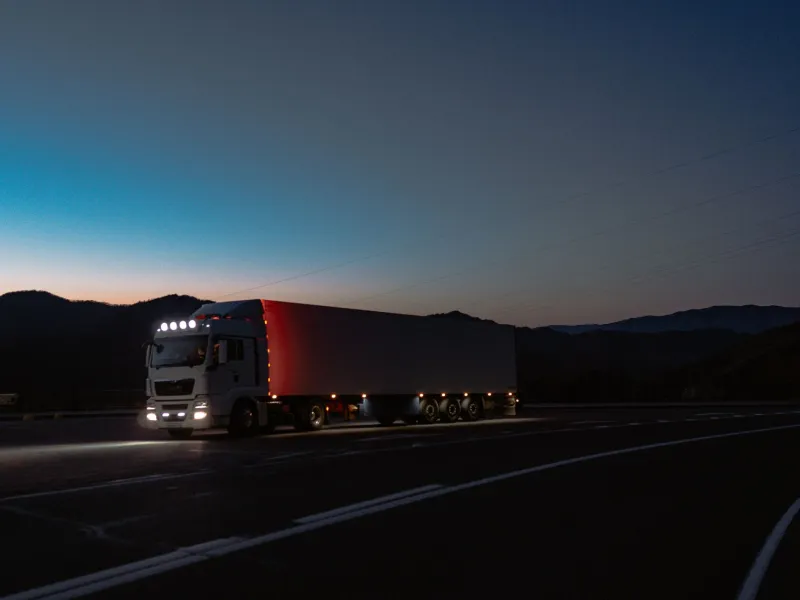
The midnight run, the emergency dispatch, the delivery that simply cannot wait for conditions to normalize: these are the moments that define a courier operation's actual value. Safe Courier is built around the understanding that secure delivery is not a fair-weather commitment. It is a standard that holds regardless of what the weather — or anything else — decides to do.
When the grid goes dark, the question is not whether your shipment needs to move. It is whether your courier is ready to move it.