Delivered on Paper, Lost in Reality: The Hidden Vulnerability Between Carrier Notification and Confirmed Receipt

For most online shoppers, the moment a delivery notification arrives on their phone feels like the end of a transaction. For e-commerce businesses, however, that same notification can mark the beginning of a problem. Across the United States, a growing number of customer disputes, theft claims, and chargeback requests trace back not to lost packages or damaged goods—but to the ambiguous interval between a carrier's digital declaration of delivery and the moment a recipient actually holds the package in their hands.
This distinction matters far more than most businesses appreciate, and the consequences of ignoring it are measured in dollars, customer relationships, and operational headaches.
What 'Delivered' Actually Means to a Carrier
When a major carrier marks a shipment as delivered, it is recording a logistical event: the driver deposited the package at or near the destination address. That event does not necessarily mean the package was placed in a secure location, handed to an authorized recipient, or even left where it could be easily found.
In practice, 'delivered' can mean any of the following:
- Left on a front porch, visible from the street
- Placed inside an apartment building's unsecured lobby
- Handed to a neighbor or building staff member without the recipient's knowledge
- Dropped behind a bush, near a back gate, or at the wrong unit entirely
- Left in a location the delivery driver deemed reasonable but that the customer considers inaccessible
Each of these scenarios generates the same delivery notification. Each carries a meaningfully different level of actual security. And in each case, if the package subsequently disappears, the business that shipped it is typically the first entity a customer contacts—and often the entity expected to resolve the situation.
The Notification Timing Problem
Carrier delivery scans are frequently logged at the moment of drop-off, not at the moment of verified receipt. This creates a timing gap that can span hours. A package scanned as delivered at 11:42 a.m. may sit unattended on a doorstep in a busy residential neighborhood until a homeowner returns from work at 6:00 p.m. During those intervening hours, that package is exposed to weather, passersby, and the well-documented phenomenon Americans have come to call 'porch piracy.'
According to data consistently cited by consumer research organizations, tens of millions of Americans report having packages stolen from their doorstep in any given year. The holiday shipping season amplifies this risk considerably, with theft rates spiking in direct proportion to delivery volume. Yet the delivery notification system most carriers employ was not designed with theft prevention as a primary concern. It was designed for operational efficiency—to confirm that a driver completed a stop and moved on to the next one.
For businesses relying on that notification as proof of successful delivery, this is a structural vulnerability, not an edge case.
Signature Requirements: A Solution That Often Goes Unused
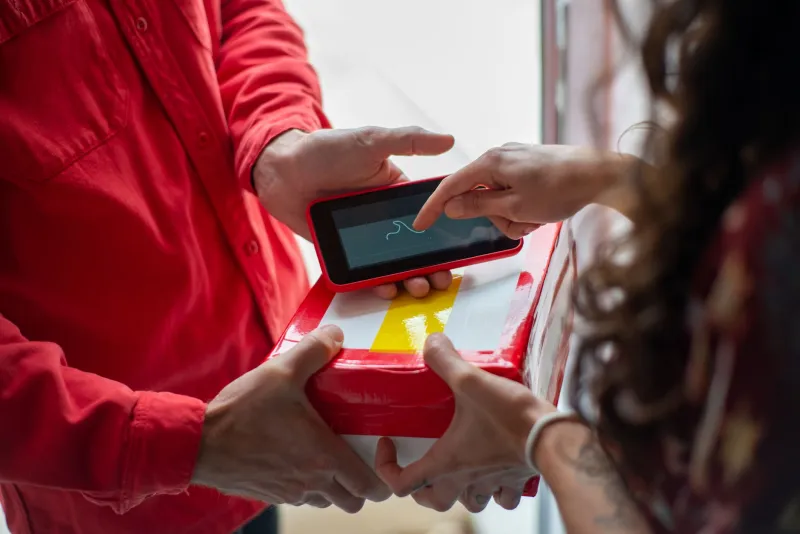
The most straightforward remedy for the notification gap is also the most underutilized: mandatory signature confirmation. When a carrier is required to obtain a signature before marking a package as delivered, the ambiguity largely disappears. A human being was present, acknowledged the package, and accepted responsibility for it.
Yet many businesses, particularly in e-commerce, actively avoid signature requirements. The reasoning is understandable. Signature delivery creates friction. Customers who are not home at the time of the first attempt must reschedule or visit a pickup location, which generates complaints and negative reviews. In a competitive retail environment where convenience is currency, requiring a signature can feel like a liability.
The result is a calculated trade-off that many businesses make without fully accounting for what they are accepting in return. Waiving signature requirements transfers the risk of post-delivery loss from the carrier to the business—and, ultimately, to the customer experience when something goes wrong.
Handoff Procedures and the Chain of Custody
Beyond signature requirements, the broader issue is one of chain of custody. A well-managed shipment should have a documented, verifiable record of who held the package at every stage of its journey—from origin to final recipient. In practice, the handoff between a carrier's delivery driver and the end customer is often the least documented moment in that entire chain.
This matters significantly when a dispute arises. If a customer claims a package never arrived, or arrived damaged, or was stolen shortly after delivery, the business must reconstruct what actually happened. Without clear handoff documentation—timestamped, geolocated, and ideally accompanied by photographic evidence—that reconstruction relies on carrier logs that may be incomplete, generic, or difficult to obtain.
For businesses shipping high-value goods, pharmaceuticals, electronics, or any item where the cost of a loss claim is substantial, this documentation gap is not a minor inconvenience. It is a financial exposure.
How Verification Protocols Change the Equation
At Safe Courier, the approach to final-mile delivery is built around closing the gap that standard carrier notifications leave open. Rather than treating the delivery scan as the end of the process, our verification protocols treat it as a checkpoint within a larger accountability framework.
This includes:
Photographic proof of placement. Every delivery generates a timestamped, geotagged image confirming where the package was left and the condition it was in at the moment of handoff. This creates an objective record that is available to both the sender and recipient.
Recipient-specific confirmation. For shipments requiring a higher level of security, our couriers obtain direct confirmation from an authorized individual before the delivery is marked complete. This is not a checkbox exercise—it is a documented exchange that establishes clear chain of custody.
Real-time status transparency. Notifications sent through Safe Courier's system reflect actual delivery conditions, not just driver scan data. When a package is marked delivered, that status corresponds to a verified event, not a logistical shorthand.
Dispute resolution support. When a customer raises a concern about a delivery, businesses that ship through Safe Courier have access to delivery documentation that makes resolution faster and more defensible. Rather than relying on a carrier's generalized logs, they have specific, retrievable evidence tied to that individual shipment.
The Business Case for Closing the Gap
For e-commerce brands, the argument for tighter delivery verification is not simply about preventing theft—though that alone justifies the investment. It is about preserving the customer relationship at the moment it is most fragile.
The post-purchase experience is where brand loyalty is won or lost. A customer who receives a 'delivered' notification, steps outside to find nothing, and then spends forty minutes on hold with a carrier's customer service line is not going to associate that frustration with the carrier. They are going to associate it with the business that sold them the product. That perception gap—between where the failure actually occurred and where the customer assigns blame—is one of the most persistent challenges in e-commerce logistics.
Businesses that invest in delivery verification are not just protecting individual shipments. They are protecting the perception that their brand is reliable, that orders will arrive as promised, and that problems, when they occur, will be resolved with transparency rather than deflection.
A Notification Is Not a Guarantee
The delivery notification is a useful tool. It manages customer expectations, reduces inbound inquiries, and provides a basic record of carrier activity. What it is not—and what no one in the logistics industry should represent it as—is proof that a package is safe.
The distinction between 'delivered' and 'securely received' is not semantic. It is operational, financial, and reputational. Businesses that treat these two things as equivalent are accepting a level of risk that grows with every shipment they send. Businesses that recognize the gap and take deliberate steps to close it are the ones whose customers keep coming back.