Where the Warehouse Ends and the Courier Begins: Closing the Fulfillment Accountability Gap

Every lost shipment triggers the same reflexive response: blame the carrier. It is an understandable instinct. After all, the courier is the last party to touch the package before it reaches the customer. But in practice, a substantial portion of delivery failures have nothing to do with what happens on the road. They originate in the warehouse—in a mislabeled box, an inaccurate pick ticket, or an inventory system that recorded a shipment as dispatched before it ever left the dock.
For businesses serious about protecting their supply chains, the more productive question is not "why did the courier fail?" but rather "where, precisely, did control of this package change hands—and was that transition documented?"
The Handoff Moment Is Where Risk Concentrates
In logistics, the transfer of custody from a shipper's facility to a courier's possession is deceptively simple in concept and extraordinarily complex in execution. A driver arrives, packages are loaded, paperwork is signed, and the truck departs. What that sequence conceals is a dense web of potential miscommunications: discrepancies between the manifest and the actual package count, damaged goods that were not flagged before pickup, address labels that were printed with outdated routing data, or packages that were staged in the wrong zone and loaded onto the wrong vehicle.
Each of these failure points sits squarely in the shipper's operational domain. Yet when the customer calls to report a missing delivery, the fulfillment team's first call is typically to the courier—not to their own warehouse management system.
This pattern is not merely frustrating for carriers; it creates genuine legal ambiguity. Without a clearly documented chain of custody that begins at the moment of handoff, neither party can conclusively establish where the failure occurred. Disputes drag on, claims are denied, and customers are left without resolution.
Inventory Mismatches: The Silent Source of Shipping Failures
One of the most common—and least discussed—contributors to downstream delivery problems is the inventory mismatch. This occurs when the quantity or description of items recorded in a warehouse management system does not correspond to what is actually packed and staged for pickup.
Consider a mid-sized e-commerce retailer that ships several hundred orders daily. A picker selects the wrong SKU, but the barcode scan registers a successful pull. The item is packed, labeled correctly for the intended recipient, and handed to the courier. The courier delivers it on time. The customer receives the wrong product. By every measurable metric, the courier performed flawlessly—yet the business files a complaint alleging a fulfillment error caused by "shipping problems."
This scenario plays out across industries every day, and it illustrates a critical point: courier accountability can only begin where accurate fulfillment ends. If the package handed to the driver does not reflect what the system says it contains, no amount of courier diligence can correct the error downstream.
Establishing a Defensible Chain of Custody
The solution is not to distrust couriers or to over-engineer every pickup. It is to build systematic documentation practices that create a clear, timestamped record of the handoff. Businesses that do this well share several common practices.
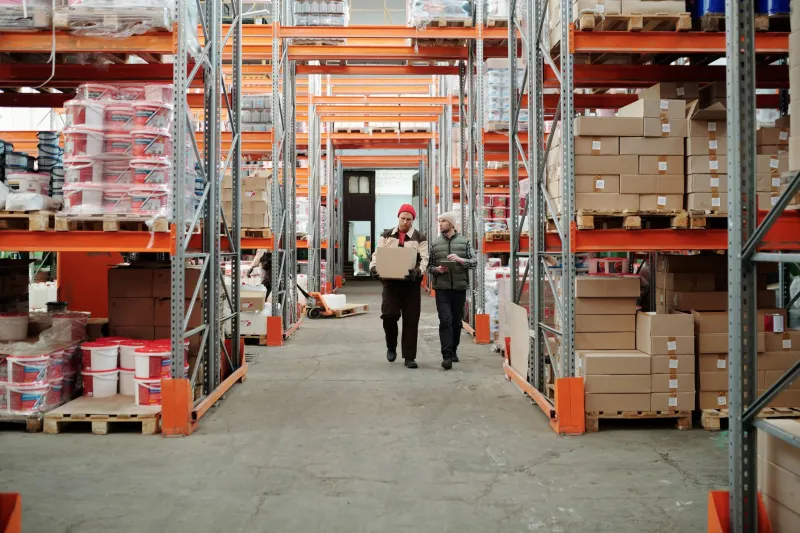
Piece-count verification at the dock. Rather than relying solely on manifest totals, a designated team member physically counts packages as they are staged for pickup and compares that count against the outbound manifest. Discrepancies are flagged before the driver signs anything.
Condition documentation. Photographs taken at the point of handoff—particularly for high-value or fragile shipments—establish a visual baseline. If damage is claimed at delivery, both the shipper and the courier have a reference point for determining when it occurred.
Signed pickup receipts with item-level detail. A generic signature on a bulk manifest provides very little protection in a dispute. Receipts that itemize package identifiers, weights, and destination ZIP codes create a far more defensible record.
Real-time system synchronization. The moment a package is handed to a courier, the warehouse management system should reflect that transfer. Orders that remain in a "staged" or "pending pickup" status hours after a scheduled pickup window are a red flag worth investigating immediately.
Auditing Your Own Fulfillment Before You Audit Your Carrier
Before a business can fairly evaluate courier performance, it must be willing to examine its own fulfillment operations with the same rigor. A useful starting point is a retrospective review of all shipping claims filed over the previous twelve months. For each claim, the business should attempt to answer three questions:
- At what point in the process was the problem first detectable?
- Was there documentation at the handoff that could have identified the issue earlier?
- Did the courier's behavior contribute to the outcome, or was the failure already baked in before pickup?
In many cases, this exercise reveals that a meaningful percentage of "courier problems" were actually fulfillment problems—and that the business has been spending time and resources pressuring the wrong party.
The Role of a Reliable Courier in a Well-Structured Handoff
None of this is to suggest that couriers bear no responsibility. A reputable courier service should be an active participant in the handoff process, not a passive recipient of whatever arrives at the dock. Drivers who are trained to flag obvious discrepancies—an open or visibly damaged box, a package count that does not match the manifest, a label that is illegible or affixed incorrectly—add a critical layer of protection that benefits both parties.
When a courier operates as a genuine logistics partner rather than a transactional vendor, the handoff becomes a collaborative checkpoint rather than a liability transfer. That distinction matters enormously when something goes wrong.
The warehouse-to-doorstep journey is only as secure as its weakest link. For many businesses, that link is not on the road—it is on the loading dock. Addressing it requires honesty, documentation, and a willingness to look inward before looking outward.